Showing posts with label Symphony. Show all posts

Tuesday, 9 June 2015

Life Demystified: A Musical Biography 1

A human’s life is the highest form of composition and maestro craftsmanship. At conception it is glorious, in youth it is a symphony of tense and sweet movements, at old age it is a sweet resolution with a final cadence at death.


The human life is a symphony scored for a full orchestra. The symphony opens with an all-absorbing, vigorous overture that is coloured and decorated with a cry that issues when a nurse taps the baby’s head. A beautiful crescendo of Ng’e’e ng’e’e ng’ee with an angelic velvety voice swills out accompanied by melismatic ululations for a duration. In my community this takes the form of a series of 5 slurred and staccatoed melismatic notes ornamented with a glissando for a boy, and 2 beautifully staccatoed long melismatic notes ornamented with a sharp trill for a girl.


A modulation from tonic key to a subdominant key marks the life of the mother when the smiling baby becomes a crying nuisance. The plagal cadence at cease of crying brings relief to babysitter forcing the orchestra to take a long deserved breve rest.


Suddenly nightfall comes, and the melody curves downward to a calm and sombre mood. At last, the mom can sleep. Well-modulated and sweet slurred running notes render it possible for the conductor to express the mom’s relief at the thought of a peaceable sleep.With no warning, the melody erupts into a disturbing aria:
Ng’ee ng’ee. Hello mamma, hakuna kulala, wake up and rock me
ng’ee ng’ee rock me, hello mama.


The second part of the movement subtly modulates to a syncopated 2-part recitative aria scored for the Alto and Bass parts. In the first part both sing in unison after which bass rests and alto is left oscillating between tense discords. In the aria:
Alto: Nyamaza toto. Shh! Shh! Mommy is here, shut up
Bass: Rock that child until it shuts up. Or cover its mouth. It is disturbing my sleep..


The movement is marked by a conversation amongst the strings. A harsh violin, radiant viola and an agitated cello. It conjures up the image of the shrieks of a baby, the efforts of the mother to soothe it, and the agony of a man whose sleep has been ruined. The growling cello finally dies expressing the reluctant acceptance of unpleasant nights filled with baby cries. The violin smiles mutely and whispers to itself:
How sweet to be a child
Attention on me all focused
Her, Time all on me Spent
His, Sleep on me Spoilt


The keyboard plays a chromatic harmony on both right and left hand to depict the sharp and low shrieks of the baby. The running notes descend in a decrescendo(andante) and settle at Middle C bringing a sigh of release for the mommy. A plagal cadence marks the end of ‘crying baby agony’. At last, mom can sleep.


The sun rises brightly in a Dorian mode exhibited by the Gregorian-like chanting of birds and graceful ballerina-like dancing of trees. The chromatic melody takes on a bright texture with all strings and brass playing expressive dynamic harmony that is harmonious with the ever-sweet morning sun-rays. The clarinet plays an esoteric melody that is so Mozart Like as the mom welcomes her family to the breakfast table. The piano plays serene middle notes with a higher C’ to show joy of family, the viola takes on slurred happy notes before dissolving into staccato quick notes of mom kissing kid goodbye as she leaves for job. The cello patronizes the melody as the man drives the lady to work. Each instrument wanders in its own distinct melody before bursting into a grand chorus:
We are a happy family
A family that breakfasts
together, keeps together

Saturday, 23 May 2015

The 3 B's of Music: Bach, Beethoven & Britten

THE 3 B’S OF MUSIC


Today we shall look at the 3 B's of music. They are J S Bach, Beethoven and Britten; though some will argue that Brahms is the third B. 

Heralded as “the immortal god of harmony,” “the beginning and end of all music,” and “a benevolent god to which all musicians should offer a prayer to defend themselves against mediocrity” Johann Sebastian Bach known as JS Bach (1685-1750) was a German Composer of the Baroque period. He was a contemporary of GF Handel. He is one of the few music greats whose music was written in mathematics. He is rumoured to have met intellects like John Milton (English poet who wrote Paradise Lost), and the great Italian scientist Galileo Galilei with whom he revered Mathematics as the Music of the Spheres.
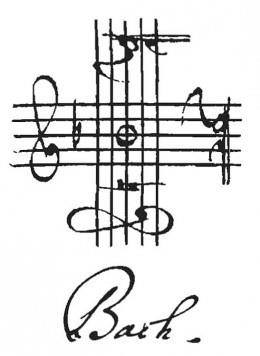
bach.jpgBach’s signature
He is famously known for his church music. His foray into secular works led him to compose the concerti grossi which made him to be considered as the father of ‘keyboard concertos’. Famous works include The Art of Fugue which is an intellectually staggering show of virtuoso and a landmark of baroque instrumental works; the Toccata  and Fugue in D Minor boasts of ornamentation and instrumental colour which serves to cement one’s love affair with Bach’s genius; Cantata No 8 is his most imaginative sacred cantata


All Bach’s works are symptomatic of dedicated genius that was not a victim of itself. His sons were his students and they inherited his musical genius though to a lesser extent. He was also a dedicated organ and composer teacher to his second wife Ann Bach.


Ludwig Van Beethoven was a child prodigy who excelled in pianism more than in other instruments. All his works bear a seal of distinction. His piano concertos bear a trademark signature of electrifying and arresting opening tuttis. The Piano Concerto No 5 in E Flat Major (Emperor) was written by a deaf 39 year old Beethoven. The emperor  was his final concerto, and has been hailed as his final heroic gift to mankind.
His symphonies exhibit a battle between struggle (disturbance) and triumph (exhilaration) what has since become the Teutonic tradition of ‘Beethovian’ interpretation. The translation from scherzo to finale in the 1st movement of the 5th Symphony(No 5 in C Minor) attests to this. His choral symphony embodies the spirit of the Romantic Period of music. Celebrating spirituality, Beethoven preaches and sanctifies optimism as the highest virtue that ennobles man and makes his existence possible. Interspersed with glorious adagios and scherzos, Symphony No 9 is most famous with its Ode to Joy. Other Beethoven greats include Archduke; Serenade in D Major; Spring Sonata; Kreutzer Sonata; No 5 in D Major on Rule Brittannia.


Beethoven’s Mass in D Major (Missa Solemnis) is a supreme masterpiece whose performance has always been disastrous. The dismal performance is attributable to the strain on the quality of solo and chorus renditions been unable to match Beethoven’s genius as expressed in the fugues of the Gloria and Credo.

The genius of Beethoven is always challenged by the ingenious Austrian Wolfgang Amadeus Mozart.


Born in England, Benjamin Britten, later knighted as Lord Britten of Aldeburgh was a music child prodigy born in the 20th Century period of Classical music. He immortalized himself with the Aldeburgh festival that he started in his home area. He is the finest opera writer England ever produced. Most of his solo works were written for his great friend and the tenor Peter Pears.


His great symphonies are the Cello Symphony and the Sinfonia da Requiem. Employing sonata form, the Sinfonia is majestic, bold and one of the most powerful orchestral works. Discarding the traditional formula of a concerto as a struggle between solo and orchestra, the pacifist Britten took a fresh approach and wrote a cello symphony that was a conversation between the two.


The lesser known Cantata misericordium was commissioned in 1962 by the Red Cross Society.It was scored for tenor and baritone soloists, chorus, string quartet and orchestra as a universal appeal for charity. The Cantata misericordium falls short of an oratorio and was adopted from the Good Samaritan parable. Another Ben’s opus is The Young person’s Guide to the Orchestra. It is adapted from a theme by Purcell (famous for his Dido and Aeneas) to demonstrate to children the instruments of the orchestra. The lofty work has a pleasant, light and expressive air due to the variant timbre and colour scheme of the full range orchestral instruments.


Other famous works by Britten include A ceremony of Carols; the Spring Symphony; Cantata Academica; Peter Grimes; The Rape of Lucretia among other operas and scores developed for films and theatre.